
Why Do DCT Automatic Cars Overheat in Indian Traffic?
By MotoDecode Editorial Team, Car and auto-industry coverage for Indian buyers
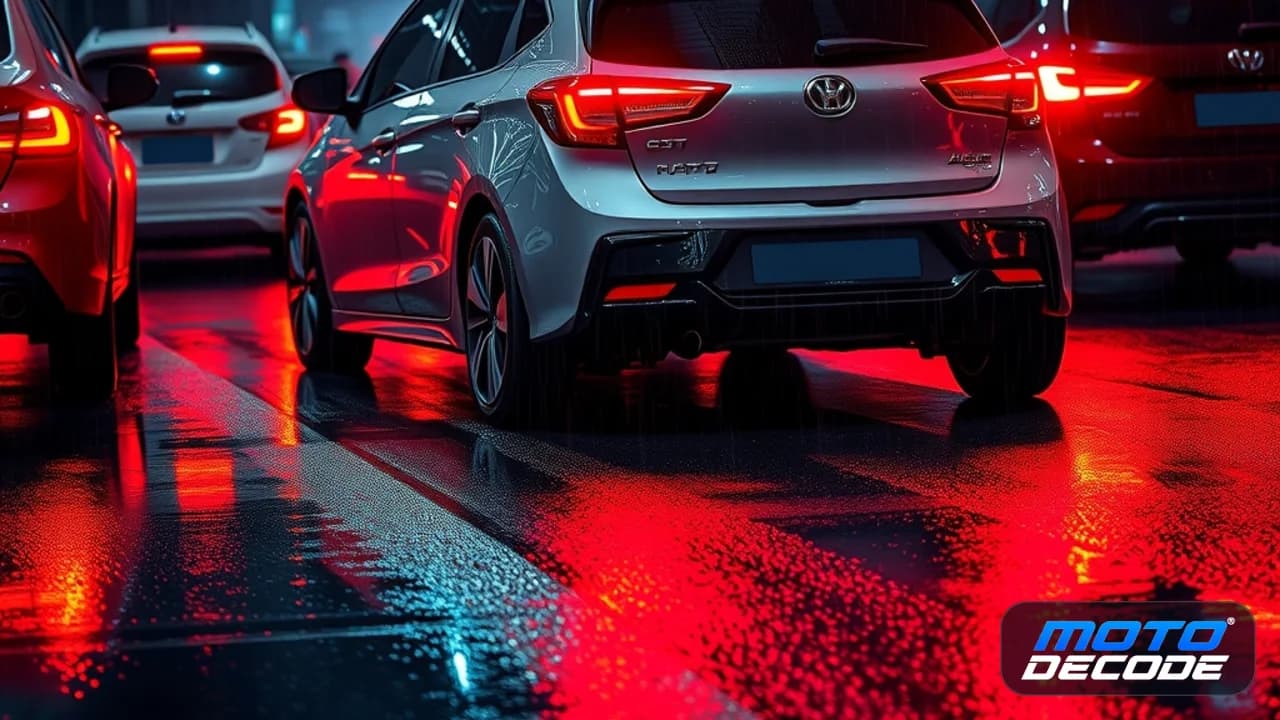
Imagine standing in an endless crawl through peak-hour city traffic. You press the accelerator slightly to move forward three inches, tap the brake, wait ten seconds, and repeat for forty-five minutes. Suddenly, an amber warning light flashes across your instrument cluster: Transmission Temperature High. Stop Safely.
If you drive a modern car equipped with a Dual-Clutch Transmission—often badged as DCT, DSG, or DCA by manufacturers—this nightmare scenario is surprisingly common. Car buyers choose these modern automatics for their lightning-fast gear changes and engaging highway performance. However, intense Indian stop-and-go driving conditions can quickly turn these sophisticated systems into thermal pressure cookers.
Why do dual-clutch automatics react so poorly to slow city traffic, and what can you do to prevent permanent gearbox damage? MotoDecode breaks down the mechanics, friction, and daily driving habits that keep your automatic transmission cool and healthy.
Quick Answer
Dual-clutch automatic gearboxes overheat in heavy Indian traffic because they rely on mechanical clutch plates that continuously slip to simulate low-speed crawling. In stop-and-go traffic, this constant friction generates extreme thermal load faster than the transmission can cool itself down, especially in dry-clutch designs. Drivers can prevent overheating by shifting into Neutral during prolonged pauses, avoiding continuous crawling, and using the handbrake on inclines.
What Is a DCT and Why Do Car Manufacturers Use It?
A Dual-Clutch Transmission is essentially two manual gearboxes housed inside a single casing, managed by computer-controlled electronic actuators. One clutch operates odd-numbered gears like first, third, and fifth, while the second clutch pre-selects even-numbered gears like second, fourth, and sixth. When the car shifts, one clutch disengages while the other engages almost instantly, offering lightning-quick acceleration without interrupting power flow.
Automakers heavily feature DCT technology in popular Indian models like the Volkswagen Virtus, Hyundai Creta, Kia Seltos, and Tata Altroz because it delivers sporty performance alongside high fuel efficiency. Unlike traditional torque-converter automatics, which use fluid dynamics to transfer engine power, a DCT uses physical friction plates similar to a manual car. While this direct mechanical connection makes highway driving responsive and fun, it requires special care in urban congestion.
1. Continuous Friction During Low-Speed City Crawling
In a manual car, resting your foot partially on the clutch pedal while moving at 2 km/h causes friction heat. In a DCT automatic, the transmission computer performs this exact action automatically to create a smooth low-speed creep function. When you move at a crawl in bumper-to-bumper traffic, the clutch disc never fully locks onto the engine flywheel; instead, it slips continuously to prevent the engine from stalling.
Because Indian city traffic often keeps vehicles moving between 1 km/h and 5 km/h for extended periods, the internal clutch actuators hold the friction plates in a state of constant slipping. According to automotive engineering tests, continuous clutch slipping generates temperatures inside the housing that can rapidly exceed 150 degrees Celsius, triggering safety warning systems to prevent thermal breakdown.
2. Holding the Vehicle on Inclines Without Brakes
A common driving habit in Indian cities is using the engine throttle to balance the car on an inclined flyover or basement parking ramp instead of pressing the brake pedal. Drivers tap the accelerator just enough to keep the car stationary against gravity.
In a vehicle equipped with a DCT, using the accelerator to stay motionless on a hill forces the clutch to absorb the entire weight of the vehicle against engine torque. This subjects the internal friction material to extreme shear forces and heat within seconds. Doing this repeatedly is one of the fastest ways to cause total transmission overheating and premature clutch disc wear.
3. High Summer Ambient Temperatures
During summer months in regions across North and Central India, ambient air temperatures regularly cross 40 to 45 degrees Celsius. Under-bonnet temperatures inside a slow-moving engine bay can easily reach far higher levels due to poor airflow at low road speeds.
Standard air cooling inside the engine bay is significantly compromised when a vehicle is trapped in stagnant traffic surrounded by hot exhaust fumes from surrounding vehicles. With minimal radiant cooling available, the heat built up by repeated clutch slipping accumulates inside the gearbox housing much faster than during winter months or open highway cruising.
Dry Clutch vs Wet Clutch: A Quick Comparison
Not all dual-clutch transmissions handle heat the same way. The two primary designs sold in India differ significantly in how they manage thermal energy build-up.
| Feature | Dry-Clutch DCT | Wet-Clutch DCT |
| Cooling Method | Relies entirely on air cooling inside the housing | Clutch plates are submerged in circulating oil |
| Heat Resistance | Lower tolerance to sustained stop-and-go friction | Higher heat absorption and dissipation |
| Typical Indian Application | Mid-segment cars (e.g., 1.0L and 1.5L engines) | Premium SUVs and high-torque diesel models |
| Efficiency & Cost | Lighter weight, slightly higher fuel efficiency | Heavier, higher manufacturing and oil maintenance costs |
4 Simple Driving Habits to Protect Your DCT Gearbox
You do not need to avoid buying a dual-clutch vehicle, but you do need to adjust your driving style to keep temperatures low in dense traffic.
- Shift to Neutral at Long Stops: If traffic comes to a complete standstill for more than 10 seconds, move your gear selector from Drive (D) to Neutral (N) and engage the handbrake. This fully disengages both clutch plates, allowing the transmission to drop its operating temperature.
- Stop Inching Forward: Resist the urge to creep forward every time the vehicle ahead moves three inches. Allow a small gap to form, then move forward smoothly in one clean movement so the clutch can lock fully into gear.
- Use Auto-Hold or Handbrake on Slopes: Never hold your vehicle stationary on an incline using the accelerator. Use the brake pedal, the electric parking brake, or the Auto-Hold feature to take the load off the clutches.
- Use Sport Mode in Heavy Traffic: Counter-intuitively, selecting Sport mode in slow traffic can help. Sport mode holds first gear longer rather than constantly hunting between first and second gears, reducing unnecessary clutch switching cycles.
Frequently Asked Questions
Can an overheating DCT cause permanent damage?
Modern dual-clutch vehicles feature protective electronic fail-safes that warn the driver and will shut down power if temperatures reach dangerous limits. However, repeated thermal stress can harden rubber seals, degrade gear oil, and cause premature clutch plate wear, leading to expensive repair bills reaching over one lakh rupees.
Why don't traditional torque-converter automatics have this problem?
Traditional torque-converter automatics transfer power using hydraulic fluid rather than physical friction plates touching each other. Fluid couplings manage low-speed crawling far more smoothly without physical wear, making them inherently robust in stop-and-go urban traffic.
How long should I wait if the transmission hot light comes on?
If your car displays a transmission temperature warning, park safely on the side of the road, shift into Park (P), and leave the engine idling for 10 to 15 minutes. Idling allows the radiator fan and coolant pumps to lower under-bonnet temperatures without creating further clutch friction.
MotoDecode Verdict
Dual-clutch automatics offer incredible driving pleasure, rapid gear shifts, and impressive highway fuel efficiency. However, they are mechanical systems designed primarily for smooth fluid motion, making bumper-to-bumper urban crawling their ultimate stress test.
Understanding how your transmission operates removes the fear of ownership. By making minor adjustments—such as selecting Neutral during long red lights and letting small gaps open up before moving—you can protect your clutch components from severe heat damage for years to come.
If your daily commute involves hours of severe city traffic every single day, a torque-converter or CVT automatic remains the more effortless option. But for drivers who balance city driving with open highway trips, a DCT remains a thrilling choice once you know how to care for it.
Loading reactions…
0 comments