
Why Car ACs Blow Warm Air at Traffic Lights: The Indian Driving Dilemma
By MotoDecode Editorial Team, Car and auto-industry coverage for Indian buyers
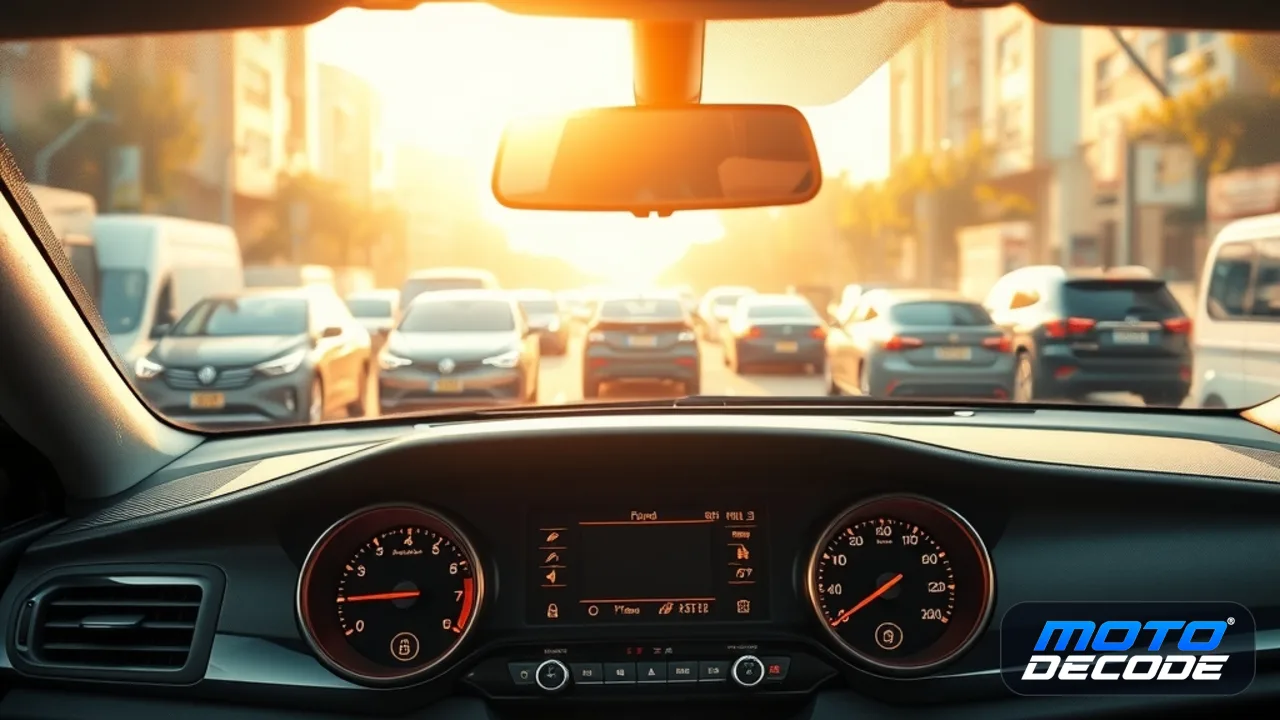
You are stuck in a crawling traffic jam in Mumbai, Delhi, or Bengaluru during peak summer. The outside temperature gauge reads 42 degrees Celsius, and you depend entirely on your car cabin remaining an oasis of cool air. Suddenly, as your vehicle comes to a complete standstill at a long red light, the breeze from the vents turns warm and humid.
The moment traffic starts moving and you tap the accelerator pedal, the icy chill instantly returns. This frustrating pattern leaves thousands of Indian drivers wondering if their car cooling system is broken or low on gas.
You are not dealing with a faulty air conditioner in most cases, but rather a basic mechanical limitation. MotoDecode breaks down why your car AC struggles at idle and how you can keep your cabin cold even in heavy traffic.
Quick Answer
Car ACs blow warm air at traffic lights because an idling engine turns the belt-driven AC compressor slowly while stationary radiator fans pull less cooling air through the condenser. When the car moves, higher engine RPM speeds up the compressor and ram airflow rapidly cools down the refrigerant.
1. The Compressor Is Driven by Engine RPM
The primary reason your car air conditioner performs poorly at a red light comes down to mechanical speed. In traditional petrol and diesel cars, the AC compressor relies on a rubber serpentine belt connected directly to the engine crankshaft.
When your car is idling at a traffic light, the engine spins at roughly 700 to 900 RPM. At this low speed, the compressor rotates slowly, pumping less refrigerant gas through the cooling loop. Once you press the gas pedal and engine speed rises above 1,500 RPM, the compressor works much faster, dramatically increasing cooling efficiency within seconds.
2. Condensers Need Airflow to Release Heat
To produce cold air inside your car cabin, your vehicle must push heat out into the environment. The AC condenser, located right behind the front bumper in front of the engine radiator, converts hot pressurized refrigerant gas back into a liquid by dumping heat into the outside air.
Why Traffic Kills Heat Dissipation
- No Natural Airflow: When moving down a highway at 60 km/h, vast amounts of fresh air pass through the front grille to cool the condenser naturally.
- Electric Fan Limitations: At a complete standstill, your vehicle relies entirely on an electric radiator fan to pull air through the hot condenser mesh.
- Extreme Ambient Heat: In Indian summers, asphalt road temperatures often exceed 50 degrees Celsius, surrounding your stationary front bumper with radiant heat.
3. Modern Engine ECU Safety Cuts
Modern cars rely on an Engine Control Unit (ECU) to manage temperatures and prevent mechanical damage. When your vehicle sits idling in blistering heat with the AC running at full blast, engine coolant temperatures quickly climb toward the danger zone.
To protect the engine block from severe overheating, the ECU will automatically disengage the AC compressor clutch for short periods. This momentary shutdown cuts off active cooling inside the cabin, causing the blower vents to push warm air until engine temperatures stabilize.
4. Automatic Engine Start-Stop System Intervention
Many modern hatchbacks, sedans, and SUVs in India come equipped with auto engine start-stop technology to save fuel. When you stop at a signal and put the gearbox in neutral, the car automatically shuts down the internal combustion engine.
Because conventional compressors require a running engine to spin, the air conditioning system switches to fan-only mode. Within 20 to 30 seconds of engine shutdown, the air coming out of your dashboard vents will feel noticeably warm and humid until the engine restarts.
How Compressor Systems Compare
| Vehicle Type | Compressor Drive Type | Idle Cooling Performance |
| Standard Petrol / Diesel | Engine Belt Driven | Low (Reduces at Idle) |
| Mild Hybrid (12V / 48V) | Engine Belt Driven | Moderate (Short Engine Stops) |
| Strong Hybrid (e.g., Hyryder) | High-Voltage Electric Drive | High (Unaffected by Idle) |
| Electric Vehicle (EV) | High-Voltage Electric Drive | High (Consistent Always) |
5 Practical Steps to Stay Cool in Traffic
While you cannot change the mechanical design of a belt-driven compressor, simple driving and maintenance habits can dramatically improve cooling performance during Indian summer traffic.
1. Switch Off Auto Start-Stop in Heavy Traffic
If your car features an automatic engine start-stop button, press it to disable the system when driving through congested city roads. Keeping the engine running continuously ensures the compressor stays engaged throughout long signal stops.
2. Use Air Recirculation Mode
Ensure the air recirculation button is switched on so your AC continuously cools the air already inside the vehicle. Drawing in fresh outdoor air forces the system to cool hot 40-degree exterior air, placing double the workload on an idling compressor.
3. Keep the Radiator and Condenser Clean
Dust, dead insects, mud, and plastic debris accumulate on the front condenser fins over time, blocking vital airflow. Have your mechanic gently spray water through the front grille during routine servicing to clear away stubborn dirt buildup.
4. Drop Gear Ratios Slightly in Slow Crawls
If you are crawling at low speeds in a manual transmission car, hold a lower gear such as first or second gear to keep your engine spinning near 1,500 RPM rather than bogging down near idle speeds. The slightly higher RPM keeps the compressor running efficiently without wasting significant fuel.
Frequently Asked Questions
Is it normal for a car AC to get slightly warmer when stopped?
Yes, a minor drop in cooling intensity when idling at a signal is completely normal for belt-driven petrol and diesel cars. However, if the air turns completely hot or the system fails to cool down after moving again, your vehicle may have low refrigerant pressure or a failing fan.
Why do electric cars and strong hybrids stay cold at red lights?
Electric cars and strong hybrid vehicles use high-voltage electric AC compressors powered directly by the main drive battery pack. Because these compressors do not rely on an engine belt or engine RPM, they maintain maximum cooling power regardless of whether the vehicle is moving or stationary.
Can a weak battery cause poor AC performance at idle?
A weak 12-volt battery does not affect the mechanical spinning of a belt-driven compressor directly. However, it can cause electric radiator fans to run slower than intended, reducing airflow across the AC condenser and lowering overall cooling efficiency when the vehicle is stopped.
MotoDecode Verdict
Experiencing warmer air from your dashboard vents at a red light is usually just a physical reality of how traditional engines operate. When your car stands still, low engine RPM combined with minimal airflow across the condenser simply limits how much heat your AC can clear out.
Understanding this balance helps you spot the difference between normal mechanical behavior and an actual cooling system failure. If your car cools down quickly the moment you accelerate, your system is functioning as designed.
By turning off auto engine start-stop on hot days, keeping your front condenser clean, and using internal air recirculation, you can minimize cabin warming and stay comfortable through the toughest Indian traffic jams.
Loading reactions…
0 comments