
Why Car Brake Rotors Get Rust Overnight (And Is It Harmful?)
By MotoDecode Editorial Team, Car and auto-industry coverage for Indian buyers
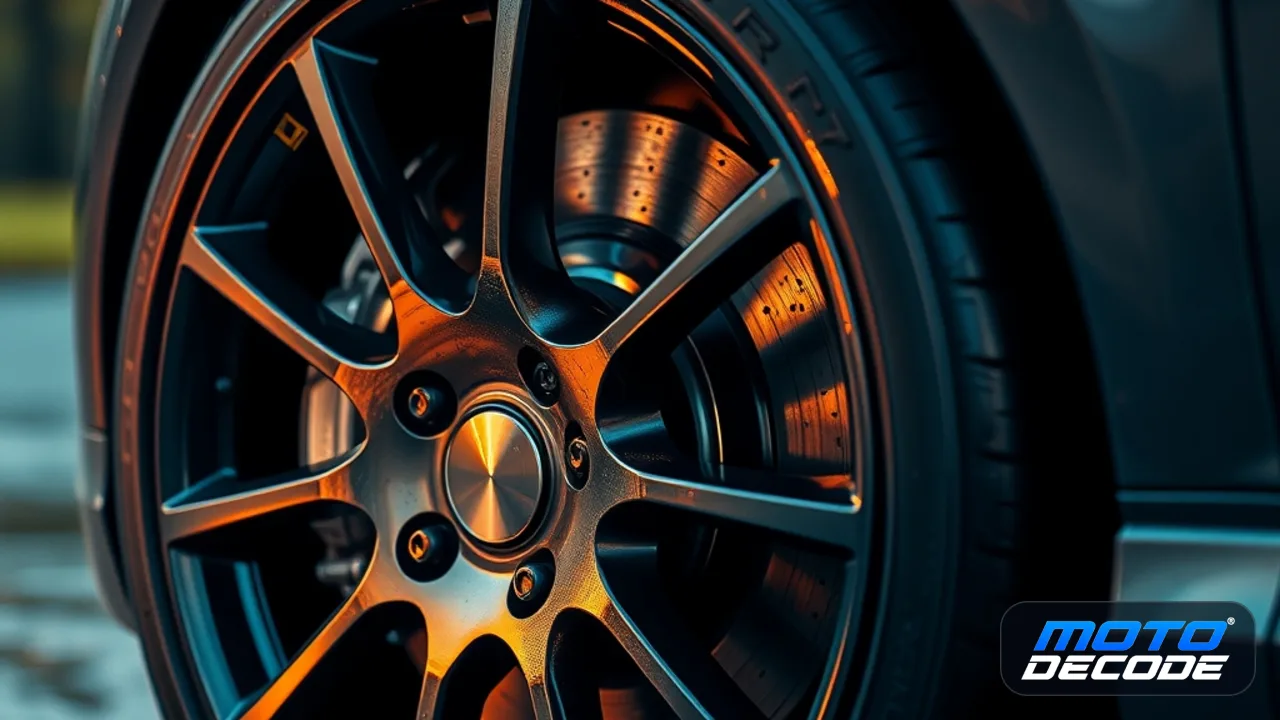
You walk out to your car on a humid rainy morning, glance at your shiny alloy wheels, and notice something alarming. The smooth steel disc behind your wheel looks covered in a layer of bright orange rust.
It looks like your car has been sitting abandoned in a barn for years, even though you drove it smoothly just yesterday evening. Many car owners immediately worry that their brakes are ruined or that cheap parts were installed during the last service.
If you have ever panicked after seeing rusty disc brakes after a night of monsoon rain or a quick trip to the car wash, you are not alone. MotoDecode breaks down why this sudden orange coating appears and why it is usually nothing to worry about.
Quick Answer
Car brake rotors rust overnight because they are made of bare cast iron, which oxidises rapidly when exposed to oxygen and moisture in the air. This surface rust is entirely harmless and clears off automatically within the first few seconds of normal braking as the brake pads rub against the rotor disc.
Why Brake Rotors Rust so Quickly
To understand why brake discs turn orange so fast, you have to look at the material they are made of. Unlike your car's exterior body panels, which are painted, primed, and clear-coated, brake rotors are exposed metal.
1. They Are Made of Cast Iron
Automakers use grey cast iron for standard brake rotors because it dissipates heat incredibly well, resists warping under extreme pressure, and provides ideal friction when pressed against a brake pad. However, cast iron contains high levels of raw iron, which reacts instantly with oxygen and water to form iron oxide, commonly known as rust.
2. No Protective Paint or Coating on the Friction Surface
While the center hub of a rotor might be painted, the flat outer surface where the brake pad presses must remain raw, unpainted metal. Any paint or protective oil layer applied to that friction ring would vaporize under braking heat and cause total brake failure. Because this bare iron is directly exposed to ambient humidity, oxidation begins within minutes of parking.
How Indian Monsoon and High Humidity Speed Up the Process
If you live in coastal cities like Mumbai, Chennai, or Kochi, or during the rainy monsoon season across Northern India, you will see rusty rotors almost every single day. The ambient moisture in warm, humid air acts as an accelerator for oxidation.
A simple evening rain shower, high morning dew, or even spraying water directly onto the wheels during a weekly wash is enough moisture to trigger a visible film of orange rust on the rotors in under two hours.
Normal Surface Rust vs Dangerous Brake Corrosion
Not all rust on a brake rotor is identical. It is crucial to differentiate between a mild, temporary surface haze and structural corrosion that requires mechanical attention.
| Rust Type | Visual Appearance | Effect on Driving | Action Needed |
| Surface Dusting | Thin, powdery orange or light brown film | Clears off after 2 to 3 brake applications | None, completely normal |
| Deep Pitting | Dark brown or black flaking with rough grooves | Causes pedal vibration and squealing noises | Inspect and resurface or replace rotors |
| Edge Delamination | Heavy thick crust along the outer rim of the disc | Can damage pad edges over time | Have a technician scrape or replace rotor |
Does Surface Rust Damage Your Brake Pads?
A frequent concern among drivers is whether applying brakes onto a rusty disc will grind down or ruin the expensive brake pads. The short answer is no, provided it is ordinary surface rust.
Modern brake pads are engineered out of semi-metallic or ceramic compounds designed to withstand immense heat and pressure. The thin layer of iron oxide is far softer than the brake pad material itself. When you tap the brake pedal, the pad acts like a squeegee, scraping away the powdery rust film without causing premature wear to the pad material.
What Happens When You Drive Away with Rusty Rotors?
When you start driving your car after it has been parked with rusty rotors, you might notice two distinct symptoms during the first few metres.
1. A Loud Clunking or Sticking Sound
If the car was parked overnight with the handbrake engaged while the rear brake discs were wet, the brake pad can temporarily stick to the rotor surface. When you pull away, you may hear a sharp clunk sound. This is simply the pad breaking free from the micro-layer of rust that bonded them together.
2. A Grinding Noise for the First Few Stops
For the first two or three times you press the brake pedal, you will likely hear a rough, scraping sound coming from the wheels. This sound is simply the pads grinding the powdery rust off the metal face. After three gentle slow-downs, the noise disappears, and the rotors will look bright silver again.
How to Safely Clear Rust from Your Brake Discs
You do not need chemical sprays, wire brushes, or mechanic tools to remove everyday rotor rust. The solution is built directly into your driving routine.
- Drive out slowly: When leaving your parking space on a damp morning, drive down your street at low speed.
- Apply gentle braking pressure: Tap your brake pedal smoothly two to three times while moving at roughly 20 to 30 km/h.
- Avoid sudden hard stops: Do not slam hard on the brakes immediately, as heavy surface dust can briefly reduce initial grip. Gentle dragging of the brakes cleans the disc evenly.
Simple Tips to Prevent Excessive Rotor Rust
While you cannot stop bare iron from reacting with oxygen, you can take practical steps to minimise heavy rust buildup on your car.
- Dry your brakes after a car wash: Never park your car immediately after washing the wheels. Drive the vehicle for one kilometre and apply the brakes a few times to heat up the discs and evaporate lingering water.
- Park in a covered garage during monsoons: Keeping your car away from direct rain splash reduces the volume of standing water on the brake components.
- Avoid leaving the car stationary for weeks: If you are traveling, ask someone to move the car back and forth slightly or take it for a brief 5-minute spin once a week to prevent surface rust from turning into deep metal pitting.
Frequently Asked Questions
Why do my rear brakes rust faster than my front brakes?
Front brakes handle roughly 60 to 70 percent of the stopping force in modern passenger cars, meaning they generate more heat and scrub clean faster than rear rotors. Rear discs often stay cooler, allowing moisture to linger longer on the iron surface.
Can I spray WD-40 on my brake rotors to stop rust?
No, you should never spray WD-40, oil, or any grease onto brake rotors or calipers. Lubricants eliminate friction, which will prevent your car from stopping and lead to severe brake failure.
Why don't high-end luxury cars get rusty brake discs?
Some exotic supercars and high-end luxury models use carbon-ceramic brake rotors instead of grey cast iron. Carbon-ceramic compounds do not contain raw iron and therefore never rust, but they cost significantly more than standard metal brake systems.
MotoDecode Verdict
Seeing a bright orange layer on your brake discs overnight can be shocking, but it is a natural chemical process inherent to cast-iron brakes. It happens to every vehicle, from budget hatchbacks to premium sedans, whenever raw metal meets humid air.
As long as the orange film wipes clean after a few light pedal presses and your car stops smoothly without harsh pedal shudder, your brakes are perfectly fine. There is no need to visit a garage or purchase specialized anti-rust sprays.
The next time you spot rusty rotors after a heavy Indian monsoon shower, simply take it easy for the first hundred metres, let your brake pads do their cleaning job, and enjoy the drive with full peace of mind.
Loading reactions…
0 comments