
Cruise Control in India: Does It Really Save Fuel on Our Highways?
By MotoDecode Editorial Team, Car and auto-industry coverage for Indian buyers
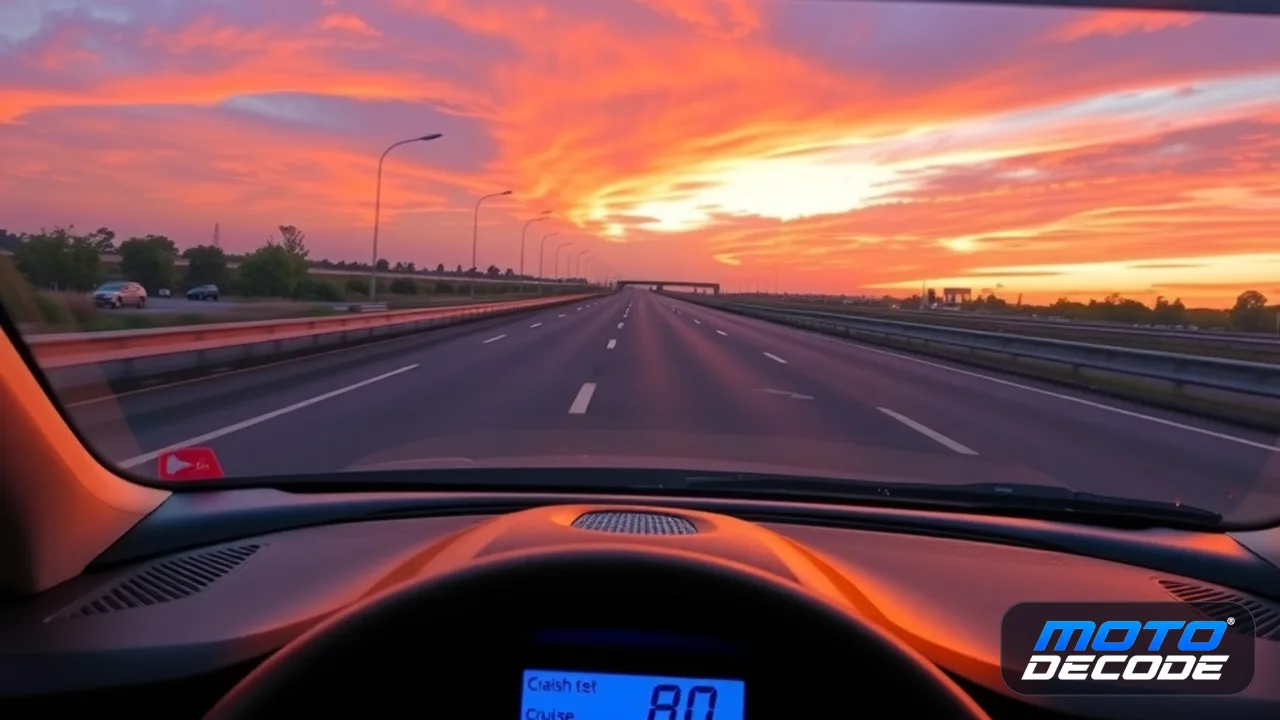
You are driving on the Samruddhi Mahamarg or the Delhi-Mumbai Expressway, and the road ahead is a straight, unending ribbon of tarmac. You press a button on your steering wheel, take your foot off the accelerator, and let the car take over the speed. It feels like the future of relaxed driving.
However, many Indian drivers are hesitant to use cruise control. Some worry that the car will lose control, while others are convinced that letting the computer manage the throttle will ruin their mileage. In a country where 'kitna deti hai' is the ultimate question, knowing the truth about this feature is essential.
MotoDecode breaks down the science of cruise control to help you decide when to engage it and when to take back manual control. We look at real-world Indian conditions to see if this feature is a fuel-saver or a hidden expense.
Quick Answer
Cruise control can improve fuel efficiency by roughly 7% to 15% when used on flat, open highways by maintaining a steady engine RPM and avoiding unnecessary acceleration. However, in typical Indian highway traffic with frequent braking or on steep hilly terrain, it can actually decrease mileage compared to a skilled driver. MotoDecode recommends using it only on access-controlled expressways for the best balance of comfort and economy.
How Cruise Control Actually Works
At its core, cruise control is an electronic system that takes over the throttle of your car. In older cars, this was done via a mechanical cable, but in modern Indian cars, it is handled by the Engine Control Unit (ECU). When you set a speed, the ECU monitors the speedometer and adjusts the fuel injection to keep the car at that exact pace.
The system is designed to be a 'steady hand.' While a human foot might fluctuate slightly in pressure due to fatigue or distractions, the computer is precise. It aims to find the most efficient throttle position to maintain momentum, which is the secret to saving fuel.
1. The Science of Steady Momentum
The biggest enemy of fuel efficiency is frequent speed variation. Every time you press the accelerator to regain speed, the engine requires a rich burst of fuel. By maintaining a constant speed, cruise control keeps the engine in its most efficient power band, often referred to as the 'sweet spot.'
On a clear stretch of road, the system minimizes the 'pump and coast' cycle that many drivers unknowingly perform. According to various automotive tests, maintaining a steady 80 km/h is significantly more efficient than constantly fluctuating between 70 km/h and 90 km/h.
2. Why Indian Roads Challenge the System
While cruise control thrives on the German Autobahn, Indian highways present unique challenges. Stray cattle, slow-moving trucks in the fast lane, and sudden diversions mean that you rarely stay at one speed for long. Every time you tap the brake, the cruise control disengages.
If you have to resume your set speed frequently, the car often accelerates aggressively to get back to that target. This 'hard acceleration' by the ECU can gulp more fuel than if you had gradually increased your speed manually. This is why cruise control is often less effective on older, crowded national highways compared to new expressways.
3. The Downside of Hills and Flyovers
A common mistake is using cruise control in hilly areas like the Western Ghats or even on long flyovers. A human driver can see a slope coming and might allow the car to lose a little speed while climbing to save fuel, or use the car's weight to gather momentum on the way down.
Cruise control, however, does not 'see' the road. It only knows that the speed is dropping and will downshift gears (in automatics) and floor the throttle to maintain the set speed while climbing. This leads to a massive spike in fuel consumption that could have been avoided with a more tactical manual approach.
Comparing Manual vs. Cruise Control Efficiency
The table below shows how cruise control impacts fuel efficiency across different Indian driving scenarios based on general technical observations.
| Driving Scenario | Manual Driving (km/l) | Cruise Control (km/l) | Efficiency Winner |
| Flat Expressway (Empty) | 18.5 | 20.2 | Cruise Control |
| Busy Highway (Frequent Braking) | 16.0 | 14.5 | Manual |
| Rolling Hills / Ghats | 12.5 | 10.5 | Manual |
| City Traffic | 11.0 | Not Recommended | Manual |
4. Adaptive Cruise Control: The Modern Solution
Many premium cars in India, such as the Mahindra XUV700 or the Honda City e:HEV, now come with Adaptive Cruise Control (ACC). Unlike standard cruise control, ACC uses radar and cameras to detect the vehicle in front. It automatically slows down when the car ahead slows and speeds up when the lane is clear.
For Indian drivers, ACC is a game-changer for efficiency. It manages the deceleration and acceleration more smoothly than a human in 'stop-and-go' highway traffic, potentially saving more fuel than the basic system by avoiding the abrupt 'brake and floor' cycle.
5. Safety Concerns for Indian Drivers
Fuel isn't the only factor; safety is paramount. Using cruise control can lead to 'highway hypnosis,' where the driver becomes less attentive because they have less to do. On Indian roads, where a hazard can appear in seconds, staying alert is vital.
Never use cruise control in the rain or on wet roads. If the car begins to hydroplane (glide on a thin film of water), the cruise control might attempt to maintain speed by accelerating, which can lead to a total loss of traction and a dangerous skid.
Frequently Asked Questions
Does cruise control damage the engine?
No, cruise control does not damage the engine. It is designed to operate within the engine's safe limits and often keeps the RPM more stable than manual driving, which can actually reduce wear and tear over long distances.
Can I use cruise control in a manual transmission car?
Yes, many manual cars in India come with cruise control. It works the same way, but if you need to shift gears to climb a hill or slow down, the system will usually disengage as soon as you press the clutch or the brake.
What is the best speed to set for maximum mileage?
For most Indian cars, the most fuel-efficient speed for cruise control is between 70 km/h and 90 km/h. Driving at 120 km/h, even on cruise control, will significantly drop your mileage due to increased air resistance.
MotoDecode Verdict
Cruise control is a fantastic tool for the modern Indian highway, but it is not a 'set it and forget it' solution for every road. Its ability to save fuel depends entirely on the environment. On a flat, empty expressway, it is your best friend for saving money at the pump and reducing leg fatigue.
However, on busy roads or hilly terrain, your own intuition is still superior. A human driver can anticipate traffic and terrain in a way that basic cruise control cannot. Use the feature strategically: turn it on when the road is clear and flat, and take over when things get unpredictable.
The smartest way to save fuel in India is to use technology as an assistant, not a replacement. By understanding when to let the ECU take over, you can enjoy a more relaxed drive while keeping your fuel costs down.
Loading reactions…
0 comments